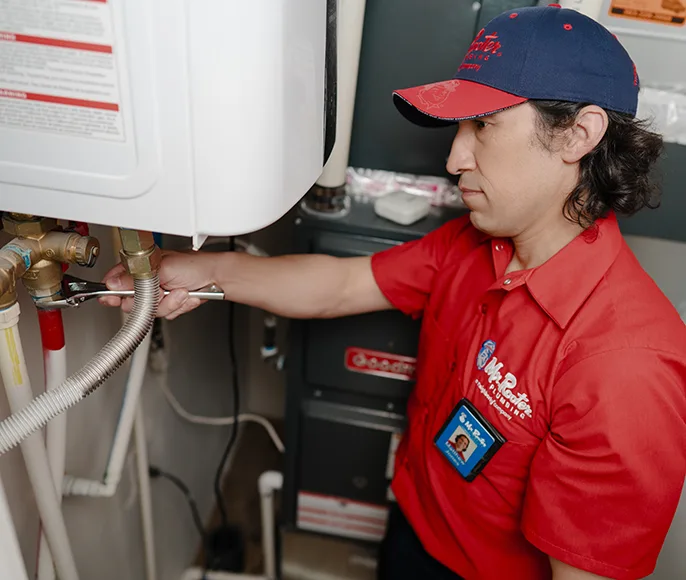
Tankless water heaters can provide a more environmentally friendly solution for heating water while reducing energy costs. Still, like every appliance, they have some drawbacks you should consider. Although many property owners can experience a wide range of benefits from tankless water heaters, some properties are less suitable for these appliances.
Pros of tankless water heaters include:
- Environmentally friendly designs: These systems are often more eco-friendly than storage setups because they use less fuel to heat an equal amount of water. Tankless systems heat water on demand, meaning you do not need to invest in a tank and can reduce standby energy losses. Lowering fuel usage can contribute to a healthy environment by reducing your carbon footprint.
- Long-term savings: When you install a new tankless water heater system, you can find great long-term savings. Tankless water heaters have a higher upfront cost than traditional setups, but they often last longer and have reduced energy and operating costs, including reduced maintenance demands, which can offset the initial purchase price.
- High efficiency: Homes using 41 gallons or more of hot water daily can increase energy efficiency by 24% to 34% using tankless heaters instead of conventional setups. Homes that use nearly 86 gallons each day can see increases in energy efficiency between 8% and 14%. You can also boost energy efficiency by installing a water heater at each hot water outlet and employing similar efficiency-enhancing strategies.
Despite the advantages of tankless water heaters, you should understand their potential drawbacks, too:
- Flow rate: Delivering hot water to every appliance can be challenging if you plan to run multiple appliances from one central tankless water heater. If you use more than 40 gallons of water each day, you may need to install an additional tank or multiple point-of-use systems to ensure you can access the water you need when you need it.
- Upfront costs: The upfront cost of tankless systems may be higher than other options. However, keep in mind that you can offset this initial cost with long-term savings.
- Setup and installation: For some properties, you might need to dedicate additional resources to installation and setup. For example, you may need to expand or upgrade your gas pipes, electrical wiring or water pipes to accommodate the system, further impacting the upfront costs.
Common Tankless Water Heater Maintenance Steps
Although tankless heaters share some common upkeep requirements with other types of systems, many homeowners find tankless water heater maintenance to be more manageable. Common maintenance needs for these systems include:
- Replacing or cleaning the water line filter: Many tankless units protect against sediment, scale and hard water by using a water line filter. Over time, this filter can experience buildup from these contaminants, which can impact your water heater and affect your faucets, plumbing and pipes if you do not address it. You can clean and reuse some water line filters but must replace others. Understand the kind of filter you have and the necessary maintenance steps for your unit.
- Cleaning the air filter: Natural gas water heaters may have a filter between the fan and air intake pipe. Cleaning this filter is easy and will help prevent the filter from clogging with debris, insects and dirt that can disrupt airflow. Your manual will depict the proper maintenance steps, which will often involve removing the component, rinsing the filter, drying it and replacing the filter inside the unit.
- Flushing and descaling the system: Descaling and flushing are two essential maintenance steps, but they are time-consuming. Lime and calcium deposits can build inside your system, even if you have a water filter. If you have hard water, you should flush and descale the water heater annually. Those with soft water can sometimes extend this process to every three or five years. Professional service for this process is safe and efficient.