Trenchless pipe lining is a no-dig, eco-friendly solution to rehabilitating pipes. This process includes three important steps in order to be completely successful:
- Camera inspection
- Pipeline cleaning
- Epoxy pipe lining
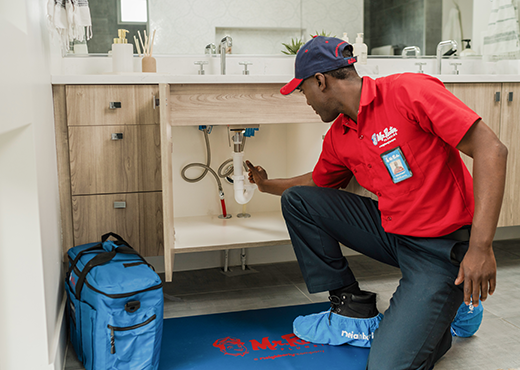
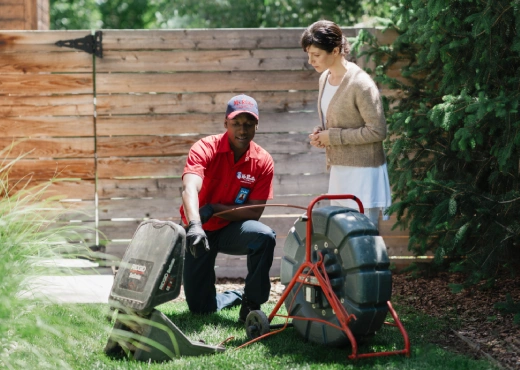
A camera inspection is conducted at the start of our visit, allowing our technicians to assess the extent of the damage in the pipes. We insert our cameras into the pipes through small access points and the inspection usually takes half an hour to complete, giving our technicians plenty of time to carefully evaluate the pipes and diagnose the problem accurately.
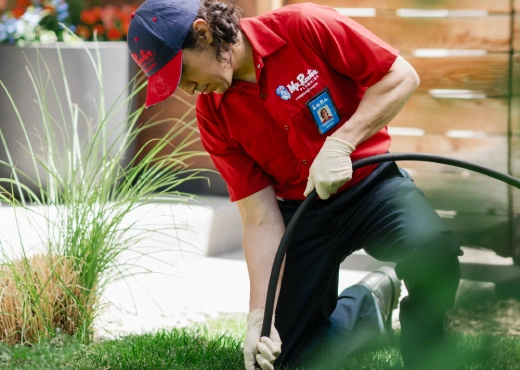
Following the completion of our inspection, our experts will determine if the pipe needs to be cleaned of any debris or waste. This is commonly the case if tree roots or dense clogs are identified in the pipes through our inspection. To effectively remove these obstructions without digging, we perform hydro jetting to clean out the pipes. This cleaning process utilizes pure, chemical-free water blasted through a hose and multi-directional nozzle at 3,500 PSI to remove waste and clogs. This not only pulverizes tree roots, it also cleans the interior of the pipe and completely washes away the waste to avoid any risk of clogs becoming trapped further in the pipe system.
After the pipe has been restored to its default diameter size through the removal of the waste and corrosion, we can begin the repair steps. This involves preparing an inflatable tube to be inserted into the pipe. Before this is done, we apply an even coating of epoxy resin to the tube directly, making sure that we apply enough coating to sufficiently fix the inside of the sewer or water line.
Once this step is completed, we insert the liner into the damaged pipe and position it where the leak, crack, or break is located. The liner is then inflated with compressed air that forces it to expand and fit smoothly to the inside of the pipe. The pressure of the expansion transfers the epoxy resin from the tube to the interior of the sewer pipe, filling in cracks and leaks before sealing them away with a thick layer of resin.
The curing and hardening process of the epoxy resin typically requires a few to several hours, and this results in the liner becoming adhered to the inside of the host pipe.