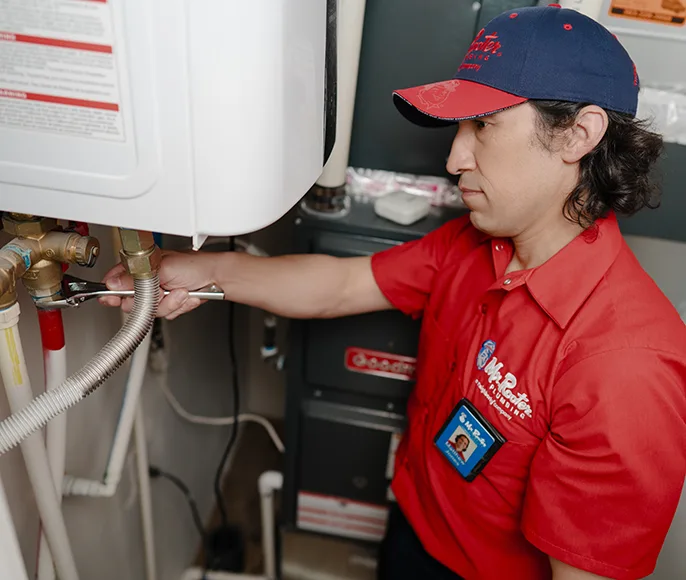
A residential tankless water heater hooks up to a fuel source to power it. Connecting a tankless water heater requires plumbing service professionals like Mr. Rooter Plumbing of winston-salem to perform a careful installation. However, homeowners can install tankless water heaters that run on various means of energy. Some households use gas to power their appliances, including their water heaters. Many homeowners cover various utility needs using propane for systems besides their fire pits and outdoor grills. Whichever major fuel sources you have running into your house, you can typically find a tankless water heater to run on them. The following are tankless water heater types you can invest in for your home:
- Gas-powered tankless water heaters
- Propane-powered tankless water heaters
Residential Tankless Water Heaters & Their Benefits
Mr. Rooter Plumbing of winston-salem recommends investing in gas and propane tankless water heater configurations because they offer convenience, reliability, and energy savings. Tankless water heaters give your household a continuous hot water supply to take showers, draw baths, clean your laundry, and cook without waiting for a low or empty tank to refill or heat its tank when you use your hot water heavily. Your home occupants may include spouses, children, relatives, and houseguests with unique daily schedules, so you need reliable hot water to support everyone’s activities. While a tankless water heater isn’t always the best choice for every household, it has general benefits no homeowner or plumbing professional can deny. Tankless water heater installations cost a substantial amount for homeowners. However, many people believe their new water heater’s benefits outweigh the initial installation costs. We’ve listed several benefits you get with a tankless water heater:
- Energy-efficient operation
- Smaller space required
- Less risk of water damage
- Low operation costs
- Longer lifespan than storage water heaters
- Increased property value
- Beneficial to the environment