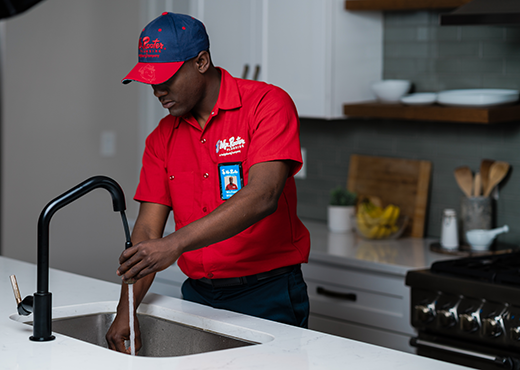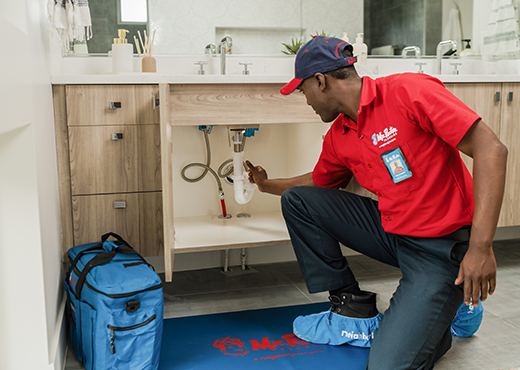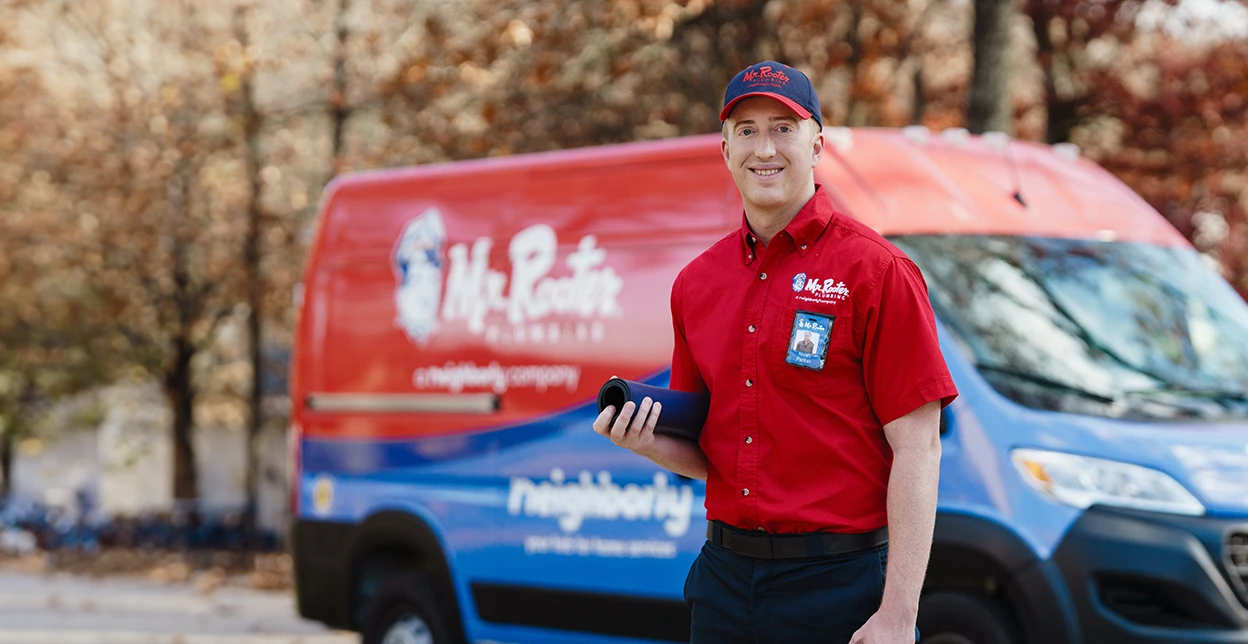
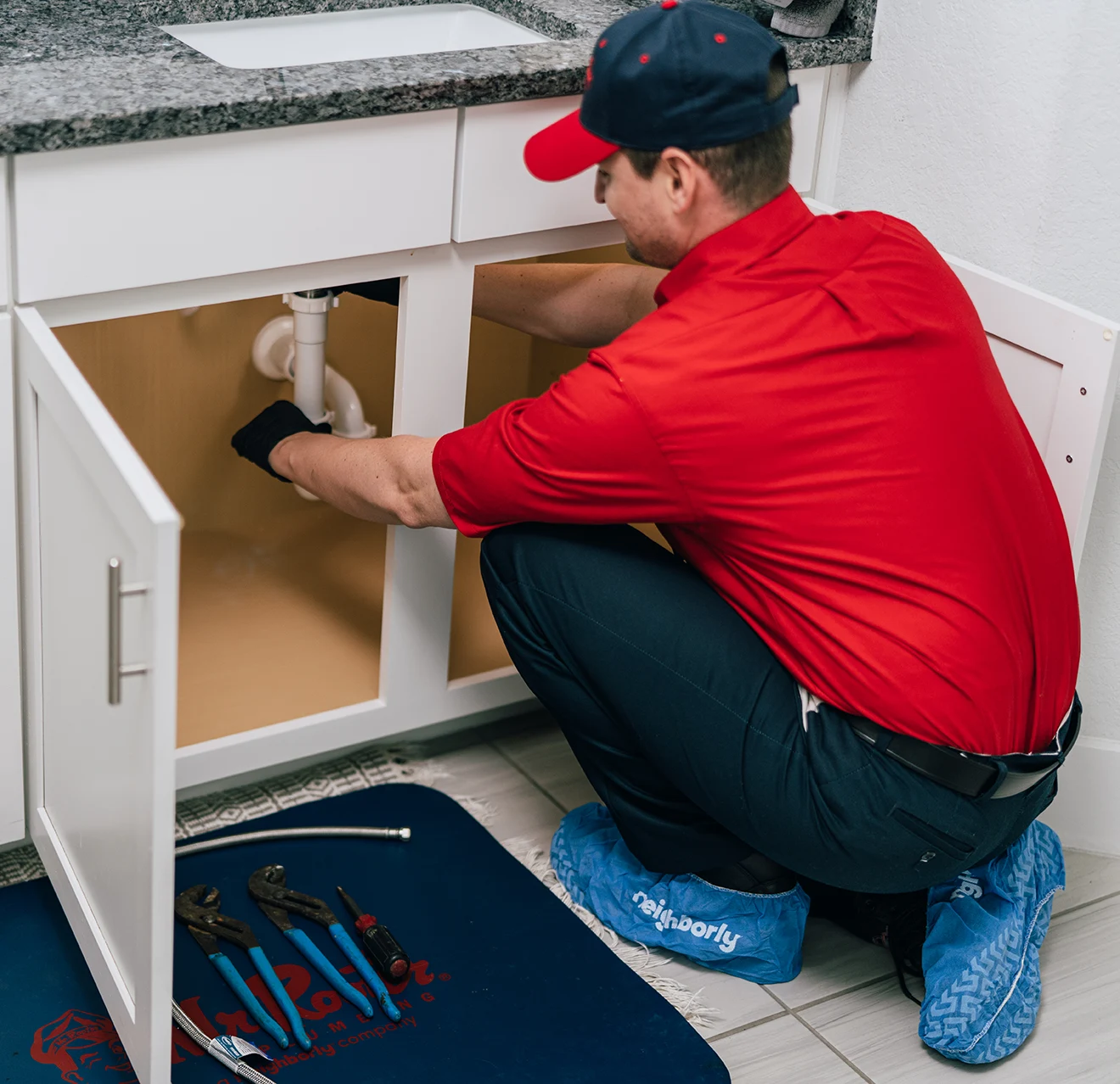
Every visit follows the same order, so you know what's happening at each step. When you call, a live person answers, asks which drains are acting up, and books a time that works for you. Your plumber arrives, protects the floor around the work area, and asks a few questions. One slow sink points to a branch line. Gurgling toilets plus a slow floor drain usually point to the main sewer line.
Next comes access. Where your home has a sewer cleanout, we use it to reach the main line directly. Many older houses in South Wayne and the Near Eastside had their original cleanouts buried or removed during remodels. If yours is missing, we work through a fixture and can quote a cleanout installation so the next service goes faster.
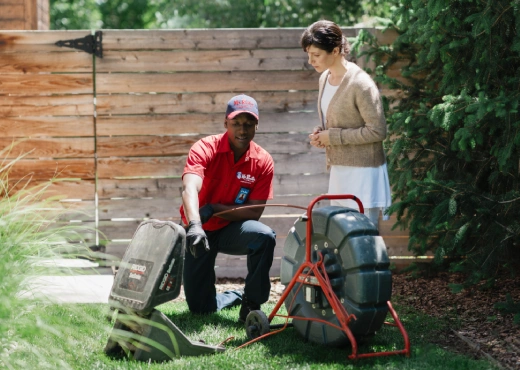
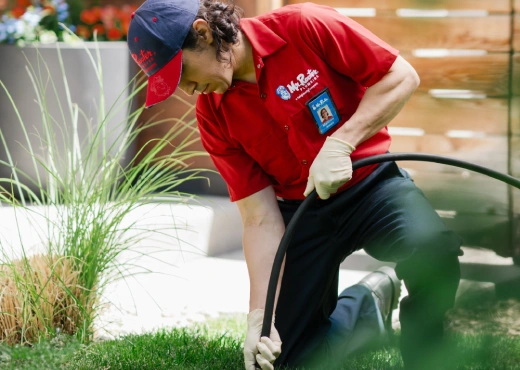
The camera goes in before any cleaning starts. You'll see what we see, and we'll explain it in plain terms. Grease and soft buildup get jetted. Root masses in a clay lateral get cut with a cable head, then flushed. If the camera shows a collapsed section, a badly offset joint, or cast iron worn paper-thin, cleaning alone won't hold, and we tell you so. That's where repair options come in, such as cast iron pipe replacement or underground pipe lining.
You get the price before we start, and it doesn't change if the job runs long. After cleaning, we run water through every affected fixture and send the camera back down to confirm the line is clear. Then we clean up and walk you through what we found, including how soon that line is likely to need attention again.
Fort Wayne winters are tough on older drain pipes, especially clay sewer lines. As the ground freezes and thaws, the soil shifts around the pipes. Tree roots are another headache, especially from late summer into fall. That’s one reason it’s worth having your drains checked before winter. If roots have started growing into the line, dealing with them early means one less plumbing problem to worry about when the ground freezes.