Lexington has many houses built between the 1940s and the 1970s, and their sewer laterals are often cast iron, clay tile, or Orangeburg, a tar-paper pipe common in postwar construction. Each one fails in its own way. Cast iron rusts from the inside and splits along the bottom. Clay comes in short sections, and roots from mature maples and oaks work their way into the joints, usually in late summer and fall when the soil dries out. Orangeburg slowly flattens under the weight of the soil above it, which is why catching it early matters.
Here’s what surprises a lot of homeowners: the lateral running from your house to the public sewer main is yours to maintain, not the city’s. Lexington agreed to more than $290 million in sewer system upgrades under a 2008 federal consent decree, but that work covers public mains and treatment, not the private line under your yard.
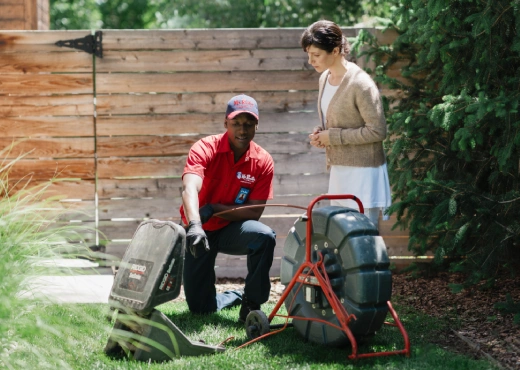
Replacing that line the old way means trenching through landscaping, a driveway, or a finished basement floor, then paying to put it all back. Lining skips most of that. We bring the same trenchless approach to homes across Fayette County and the surrounding Bluegrass, including Paris, Mount Sterling, Georgetown, Versailles, Nicholasville, Frankfort, and Midway. When a pipe is too far gone to line, our sewer line repair crew handles the dig-and-replace work instead.