How It Works
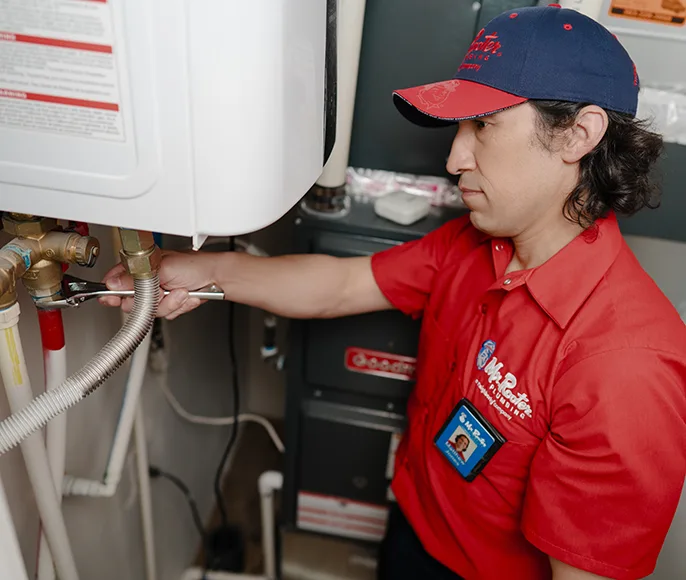
As opposed to bulky tank-based systems, on-demand water heaters use a gas or electric element to heat water as it passes through a pipe on its way to your faucet. Houses with larger hot water needs can run two tankless water heaters in parallel, or they can have individual units dedicated to specific appliances that use a lot of hot water. A tankless system also makes an excellent complement to a solar hot water installation, providing backup heating when necessary.
Pros and Cons of Hot Water on Demand
The average Syracuse home with an on-demand hot water heater will require considerably less energy to heat its water. Depending on the amount of water used in a day, and the energy efficiency and configuration of the appliance(s), on-demand water heaters can use 50% of the energy of a conventional system. In addition, tankless water heaters take up less space in the home, are easier to repair, and have a longer operational life than tank storage heaters.
On-demand hot water does have its drawbacks: systems are typically more expensive upfront than conventional water heaters, and, for houses that use more than 86 gallons of hot water a day, energy efficiency for a single unit begins to drop. Tankless water heaters can produce between 2-5 gallons of hot water per minute. While this is enough to take a shower or run the dishwasher, most systems will be unable to handle both at the same time.