Pittsburgh drains face problems you won't see in a flat, newer city. Older pipe materials, river-valley terrain, and a century-old sewer network all contribute. Our Pittsburgh drain cleaning team sees these patterns every week:
- Freeze-thaw ground movement: Winter cycles across Allegheny County shift clay sewer laterals and open gaps at the joints. Tree roots find those gaps fast, which is why root intrusion is so common in Squirrel Hill, Shadyside, and Point Breeze.
- Combined sewers: Many older districts send stormwater and sewage through the same pipes. Heavy rain overloads the system, and the result is a sewer backup through your basement floor drain.
- Aging cast iron and clay: Homes built before the mid-1950s often have cast iron drain stacks and clay tile laterals. Cast iron rusts from the inside, leaving a rough, narrowed pipe that snags grease and paper.
- Steep hillside laterals: On sloped lots in Mount Washington, Troy Hill, and Carrick, a lateral pitched too steeply lets water race ahead of solids. Those solids get stranded and build into clogs.
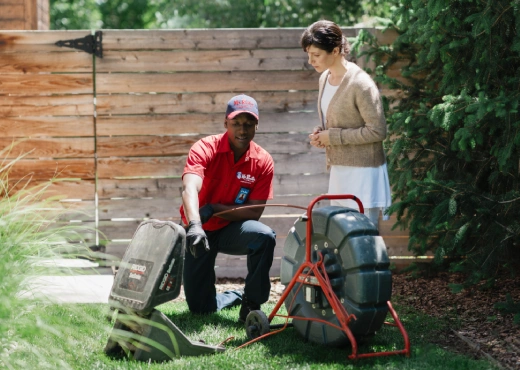
A backwater valve on your main sewer line is the most reliable defense against combined-sewer backups. It closes when sewage tries to flow toward your home. Before installing one, we run a camera inspection to confirm your lateral is sound enough to support it.
Pipe condition also decides how we clean. HydroScrub® Jetting scours pipe walls clean, but it's the wrong tool for a cast iron stack worn thin by corrosion. That's why every older Pittsburgh home gets a camera inspection before we choose a method.
Responsibility matters too. The Pittsburgh Water and Sewer Authority (PWSA) maintains the public main, while the lateral connecting your home to it belongs to you. Camera footage shows exactly where a problem starts. That record helps when you talk with PWSA or file a claim with your insurance carrier.