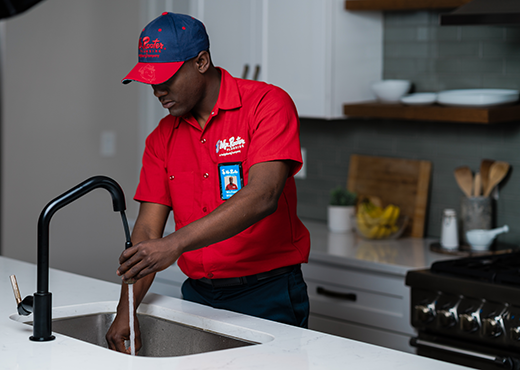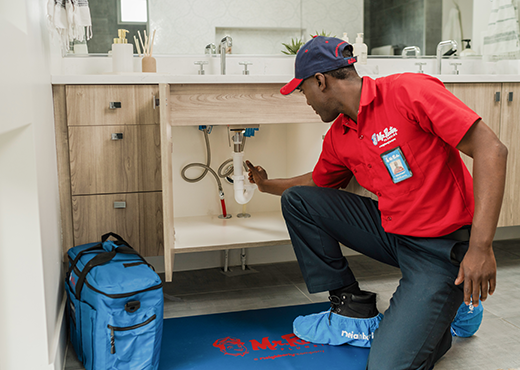
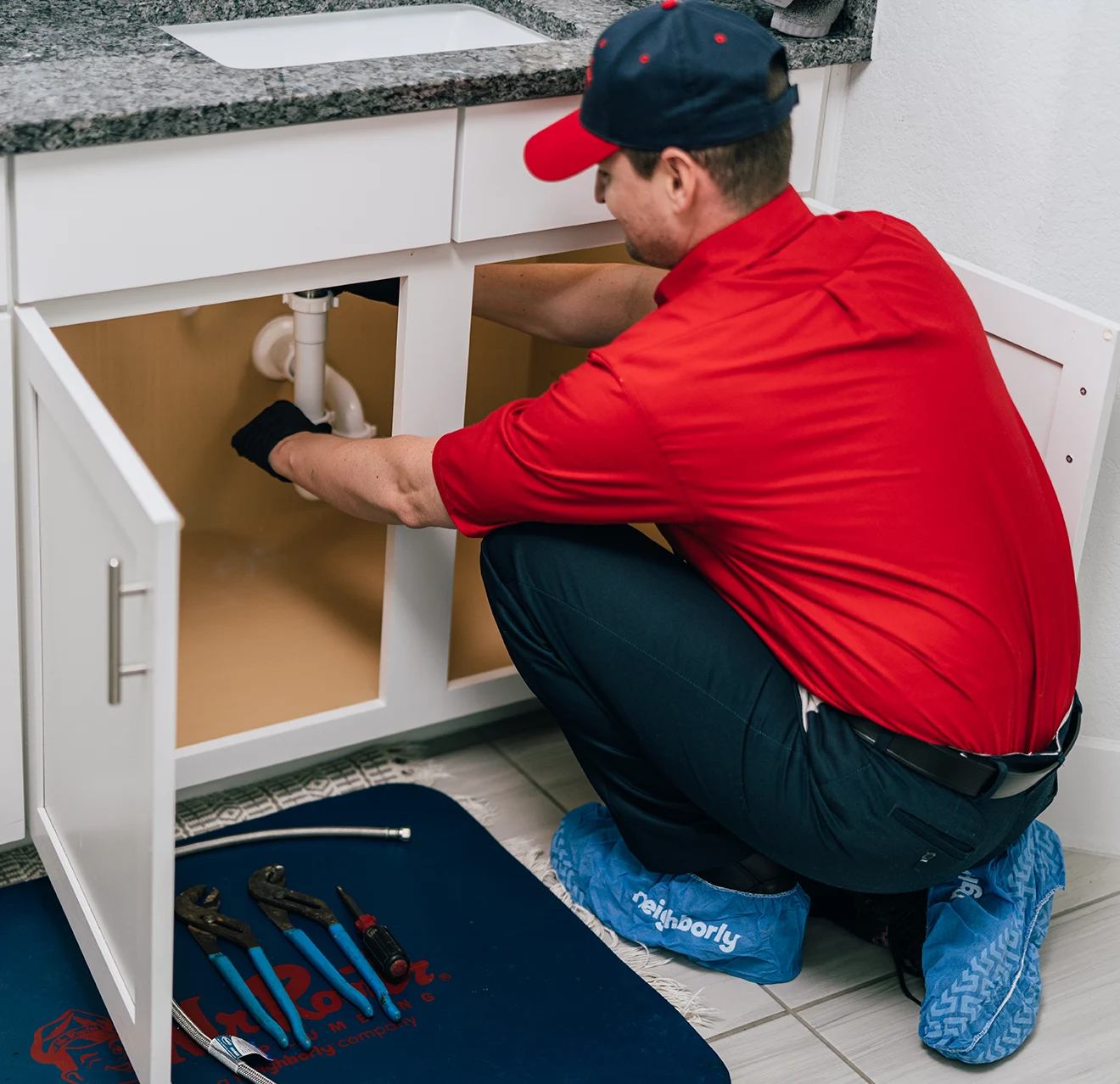
Every visit starts with questions, not equipment, because a rushed guess can send the wrong tool to the wrong pipe. Our plumber asks when the slow drain started, which fixtures are affected, and whether the trouble tracks with heavy rain or a specific time of day. That last detail matters more here than in many cities. Neighborhoods built over Eagle Ford and Austin Chalk clay tend to shift with the seasons as the soil expands and contracts, and that movement stresses old cast iron and Orangeburg pipe joints until they separate or crack. A single backed-up toilet can mean nothing more than a wad of wipes caught in the trap. A backup that hits every drain in the house at once—sinks, tubs, and toilets together—almost always points to the main line instead of one fixture.
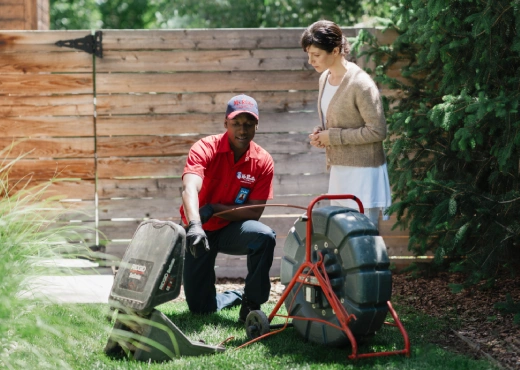
Once we've got the history, the camera goes in. Feeding a fiber-optic line down the pipe before running a snake or jetter keeps homeowners from paying for the wrong fix twice, and it gives us a real distance measurement to the problem instead of a guess. We've pulled tree roots as thick as a garden hose out of sewer laterals in older, tree-lined parts of the city, where decades-old oaks and pecans have had plenty of time to find every hairline crack in a clay pipe. Newer PVC lines hold up better against roots, but they're not immune to grease and mineral scale, especially with Dallas water sitting at 131 mg/L hardness. Even a ten-year-old PVC line can build up a surprising amount if a kitchen sink has been used as a grease disposal over the years.
From there, the method depends on what the camera shows. A single greasy kitchen line usually responds to a snake in under an hour, start to finish. A sewer lateral with years of scale, or a stretch of bellied pipe, calls for HydroScrub® Jetting, which strips the interior back to bare pipe instead of just cutting a narrow channel through the clog. Any work on a line that ties into the city sewer system follows Dallas plumbing code, and our plumbers pull permits when a repair or replacement calls for one, not just when it's convenient. We run the camera through the line again before we leave, so you're not left guessing whether the fix actually held or just moved the problem a few feet down the pipe.
No repeat visits for the same clog. No guessing about what's really wrong. Just a clear line, and a plumber who can show you the footage to prove it.
Homes near Munger Place and the M Streets, some of the oldest housing stock in the city, still run largely on their original cast iron, and that pipe is well past the age where scale and root intrusion become routine rather than occasional. Newer construction on the edges of the metro deals with a different problem: PVC holds up against roots, but builder-grade fittings and long horizontal runs can still trap grease and hair the same way older pipe does. Either way, a camera inspection tells us what problem we're actually solving before a wrench comes out, saving time on the visit and money over the life of the plumbing system.
Dallas plumbing has its own seasonal rhythm, too. Fall brings a wave of leaves and pecan husks into yard drains and cleanouts, which is when we see the most outdoor drainage calls of the year. Late spring and summer bring the heaviest rain, and with it the stormwater backups that show up hardest in neighborhoods with combined or aging storm and sanitary infrastructure. Knowing which season a problem shows up in actually helps us narrow down the cause before the camera even goes in, since a summer backup points toward rain intrusion. At the same time, a fall clog more often traces back to yard debris working its way into an open cleanout.