Skip to Main Content Skip to Footer Content
Two customers greeting a Mr. Rooter technician at their front door.

Residential Hydro Jetting in Manchester, NH

Slow drains and repeat clogs usually mean something is stuck to the inside of your pipe, not just blocking the middle. Mr. Rooter Plumbing of Greater New Hampshire uses hydro jetting, delivered through our HydroScrub® Jetting technology, to blast that buildup off the pipe wall entirely, restoring full flow to homes across Manchester instead of just poking a hole through the clog. Call our Manchester plumber

Let Us Call You

By checking this box, I agree to opt in to receive automated SMS and/or MMS messages from Mr. Rooter Plumbing, a Neighborly company, and its franchisees to the provided mobile number(s). Message & data rates may apply. Message frequency varies. View Terms and Privacy Policy. Reply STOP to opt out of future messages. Reply HELP for help.

By entering your email address, you agree to receive emails about services, updates or promotions, and you agree to the Terms and Privacy Policy. You may unsubscribe at any time.

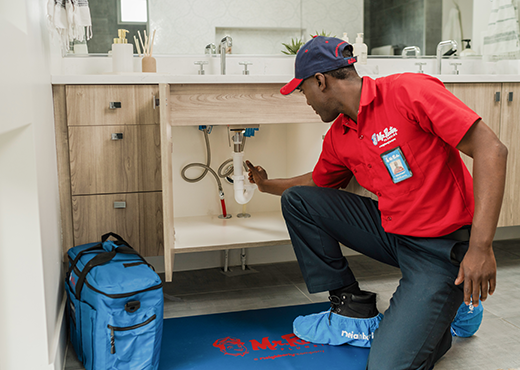
  • Before any water hits your pipe, one of our plumbers runs a video camera through the line to see exactly what we're dealing with. Grease-lined kitchen stacks look different from root-choked sewer laterals, and the hydro jetting approach changes based on what's actually in there. We're also checking pipe material during this pass, since cast iron, clay, PVC, and Orangeburg all react differently to high-pressure water. This step catches something a snake never would: a cracked or collapsed section of pipe that needs trenchless sewer repair instead of jetting. We won't run high-pressure water through a pipe that can't handle it, and we'll walk you through the footage so you can see the same thing we do.

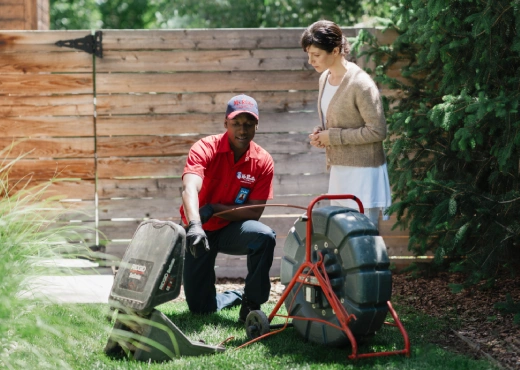
  • Once we know the line is sound, we feed the HydroScrub® nozzle in at the cleanout and dial in the water pressure for that specific pipe, up to 3,500 psi for tough sewer lines and a gentler setting for smaller interior branch lines. The nozzle has rear-facing jets that pull it forward through the pipe on its own while forward jets cut through whatever's built up ahead of it. Grease, soap scum, mineral scale, and root hair all get sheared off the pipe wall and flushed downstream toward the municipal sewer or septic connection. For a stubborn kitchen line, this can take fifteen minutes. A long sewer lateral choked with years of root growth takes longer, sometimes a couple of passes at different pressure settings, and we don't rush it just to move on to the next appointment.

  • We don't stop jetting when the water starts flowing again. We run the camera back through the pipe to confirm the wall is actually clean, not just clear enough for water to pass through the middle. If a section is still holding debris, we go back over it instead of calling it finished. This final pass is also when we flag anything structural: a belly in the line, a joint separation, an offset where two pipe segments no longer line up, so you know about it before it turns into a backup during a holiday dinner. You'll get a straight answer about whether the line just needs routine hydro jetting maintenance going forward or whether something bigger is developing underground.

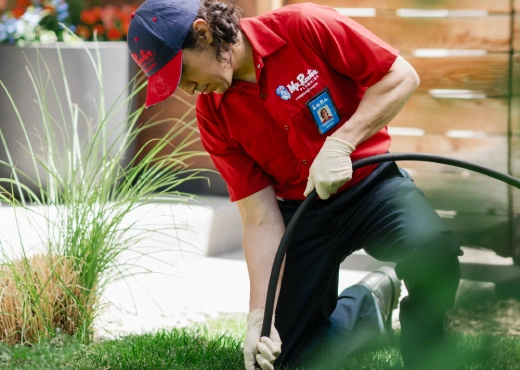
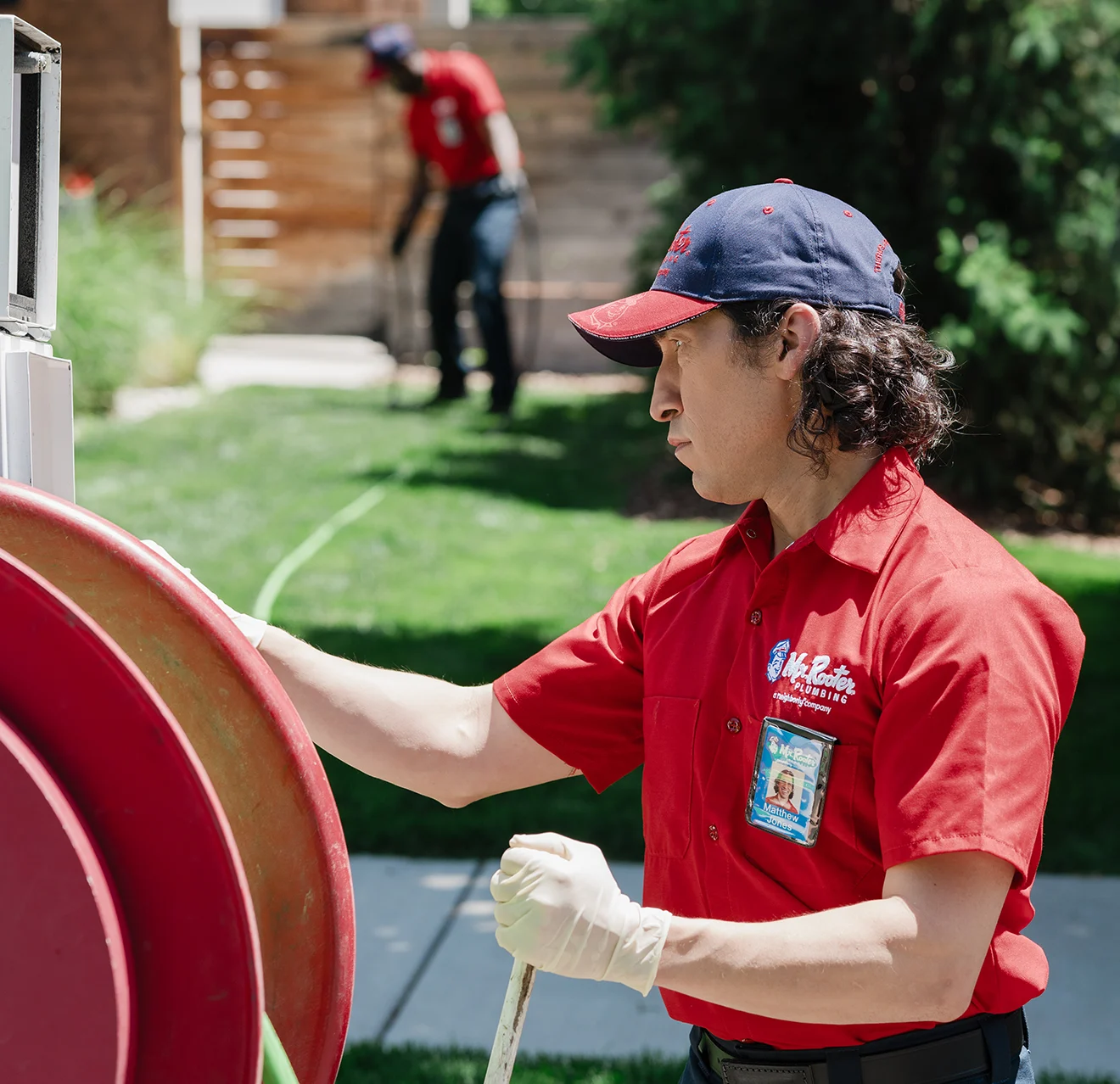
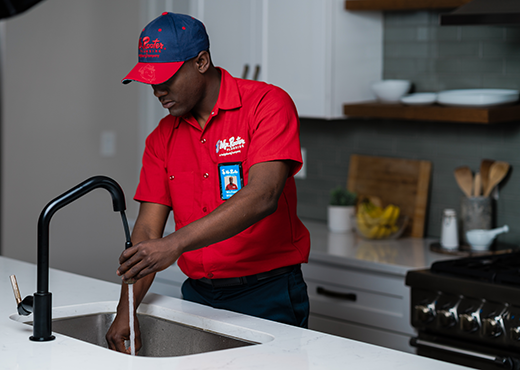
A Mr. Rooter plumbing professional at work.

Why Manchester's Older Pipes Need More than a Snake

A big share of Manchester's housing stock predates modern plumbing materials. Homes built from the 1940s through the 1970s commonly still run on cast iron, clay tile, or Orangeburg (a bituminized fiber pipe that softens and delaminates as it ages) for their sewer laterals. Cast iron typically lasts 50 to 75 years before corrosion narrows the inside diameter to almost nothing. Clay tile lasts about as long but separates at the joints, giving tree roots an easy way in. Orangeburg was never meant to last past 50 years, and a lot of what's still in the ground has already passed that mark.

A snake breaks a hole through whatever's clogging one of these lines and calls it done. HydroScrub® Jetting scours the entire inside wall, which matters more in an older line where decades of buildup have narrowed the pipe's effective diameter. That's also why we camera-inspect first. Jetting a healthy 60-year-old cast iron line is routine. Jetting a clay line with a root-split joint without knowing it's there can turn a clog into a collapsed pipe, which is exactly the risk hydro jetting is supposed to prevent, not create.

New Hampshire's plumbing code adds another layer that homeowners rarely think about. Building sewers that connect to the public system must sit at least 48 inches below grade, largely because the ground freezes so deep here. That depth protects the line from frost heave, but it also means your cleanout access point and any repair work need to account for real excavation, not a quick surface fix. Homes near mature trees add a second variable on top of pipe age. A maple or oak with roots reaching toward a moist clay joint doesn't care how old the tree is; a 30-year-old tree can crack a 60-year-old sewer line just as easily as an older one. We factor all of this in before we ever turn the water pressure on, whether the job is a straightforward drain cleaning or a full sewer line repair and replacement.
Why Manchester Homeowners Choose Mr. Rooter Plumbing

We won't upsell you on jetting a line that just needs a standard cable clearing, and we won't jet a pipe that a camera inspection shows is too far gone to help. Every hydro jetting appointment starts with that camera pass so you're paying for the right fix the first time, not a service call that gets repeated in six weeks. Our plumbers carry the HydroScrub® equipment on every truck, so a slow kitchen drain and a backed-up sewer lateral in the same visit both get handled without a second trip. We also stand behind our workmanship and parts, which matters on a service where the whole point is a result that actually lasts. If a line does turn out to need sewer system backup services or ongoing emergency plumbing services, that's the same crew and the same truck, not a referral to someone else.

Manchester is home base, but the same hydro jetting equipment rides along on calls throughout Greater New Hampshire. We're a regular, trusted local plumber in Nashua and Concord, and a familiar name for anyone searching for a plumber in Rochester, Salem, Derry, and Portsmouth. Call on us just as often as Manchester does, and the pipe conditions we see in Hudson, Laconia, Dover, and Exeter tend to mirror what we find here: aging cast iron and clay lines that respond well to jetting once we know what we're working with.

Service You Can Trust!

Let us know how we can help you today.

Services We Provide

FAQs About Hydro Jetting: Manchester, NH

Here are the questions Manchester homeowners ask most often before booking a hydro jetting appointment. Reach out if yours isn't covered here.

  • Most homes do fine with hydro jetting every one to three years. Where you land in that range depends on your pipe's age and material, how much grease or debris goes down your drains, and whether you've had backups before. Homes with frequent clogs, gurgling drains, or slow flow across multiple fixtures usually need it more often. If you run a home business that generates grease or a high volume of waste, schedule annual jetting rather than waiting for a problem to show up.

Service You Can Trust!

Let us know how we can help you today.

Let Us Call You

By checking this box, I agree to opt in to receive automated SMS and/or MMS messages from Mr. Rooter Plumbing, a Neighborly company and its franchisees to the provided mobile number(s). Message & data rates may apply. Message frequency varies. View Terms and Privacy Policy. Reply STOP to opt out of future messages. Reply HELP for help.

By entering your email address, you agree to receive emails about services, updates or promotions, and you agree to the Terms and Privacy Policy. You may unsubscribe at any time.